|
| |
Dear readers,
We are pleased to share the February issue of the European Bioplastics Bulletin with you, containing the latest news and insights from the bioplastics industry.
If you have any questions, comments, or interesting news or topics to share, please do not hesitate to contact us.
Enjoy the read!
Kind regards from the European Bioplastics team
|
|
|
|
| |
EU waste legislation recognises benefits of bioplastics
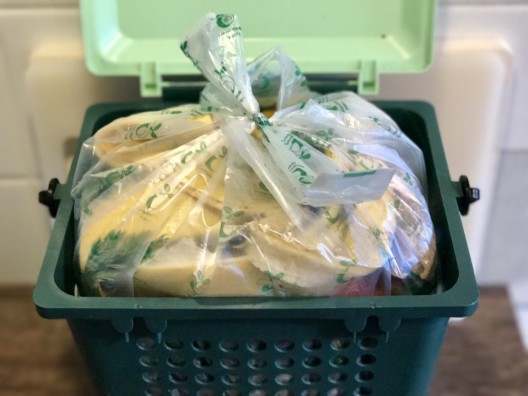
The provisional agreements reached by the European Council and Parliament on the EU waste legislative package published by the Commission in 2015, recognise the benefits of bioplastics. The new legislation acknowledges that bio-based feedstock for plastic packaging as well as compostable plastics for separate bio-waste collection contribute to more efficient waste management and help to reduce the impacts of plastic packaging on the environment. The legislative package includes the revision of the Waste Framework Directive and the Packaging and Packaging Waste Directive.
|
|
|
|
|
| |
New EU standard for biodegradable mulch films in agriculture published
Last October, the European Parliament voted in favour of the use of biodegradable mulch films in the revision of the EU Fertilisers Regulation. In order to harmonise regulations across Europe, the amendments on biodegradable mulch films are linked to the criteria of a new European standard EN 17033 on biodegradation of plastic mulch films in agriculture developed by CEN-Technical Committee 249 on Plastics, which has now been published. We asked Olivier de Beaurepaire, Market Development Biodegradable Polymers in Agriculture at BASF France, to explain the new standard in more detail.
|
|
|
|
|
| |
How much land do we really need to produce bio-based plastics?
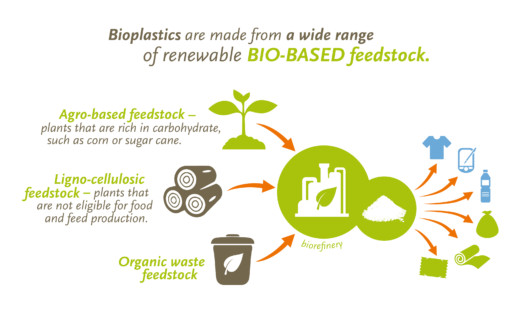
Bioplastics, which are derived fully or at least in part from renewable resources, have the unique advantage over conventional plastics to reduce the dependency on non-renewable feedstock such as crude oil and to reduce greenhouse gas emissions. Yet, the use of biomass to produce bio-based plastics raises questions about a potential competition with food and feed. But how much land do we really need to produce bio-based plastics today and in the mid-term? Constance Ißbrücker, Head of Environmental Affairs at European Bioplastics, gives some insights in this debate.
|
|
|
|
|
| |
Member portrait: Synvina
In each issue of the Bioplastics Bulletin, we present 5 facts about a member of European Bioplastics. This month, Patrick Schiffers, CEO of Synvina, shares some information on the joint venture between BASF and Avantium with the aim to become the market leader in FDCA and PEF.
|
|
|
|
|
| |
News in brief
- PHA from sewage sludge enters demonstration phase
- 3D printed object made from PLA can generate electricity
- UPM Raflatac launches new plant-based PE film
- Teijin develops formable gasoline-resistant bioplastic film
|
|
|
|
| |
Impressum |
|
European Bioplastics
Marienstr. 19-20
10117 Berlin
|
|
|
|
|
|