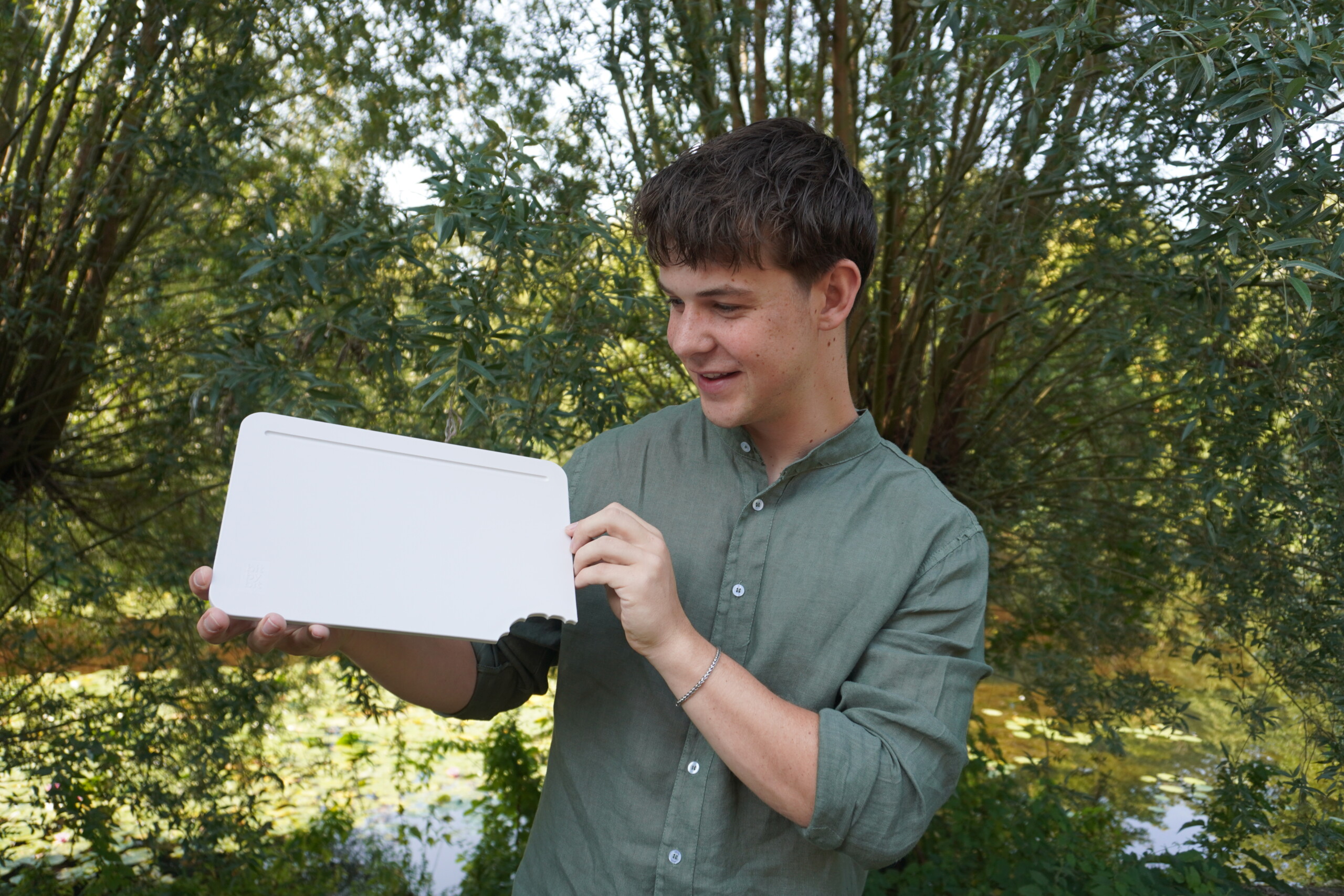
After reading about microplastics released from plastic cutting boards during use, 21-year-old Wessel Schönekerl started looking for alternatives. But every existing option came with its own disadvantages. Wooden boards require maintenance and are not dishwasher-safe, while glass boards are easy to clean but quickly dull kitchen knives. That raised a simple question: could a cutting board be made differently from the ground up?
That search eventually led to PHA, a family of biobased and biodegradable polymers produced by microorganisms. The main reason for choosing PHA was its end-of-life behaviour. Cutting boards inevitably wear during use and small particles can be released through knife abrasion. With conventional plastics, these particles can remain as persistent microplastics. PHA is not just biodegradable, but also biocompatible. That means PHA’s are metabolized by the human body into natural compounds – if small PHA particles would enter the body, they would also be broken down by the body.
The challenge was to turn PHA into a durable product that could handle repeated cutting, cleaning and dishwasher cycles. This proved much more difficult than expected. PHA behaves very differently from conventional plastics during injection moulding, creating challenges such as warpage, post-crystallisation, surface quality and finding the right processing parameters.
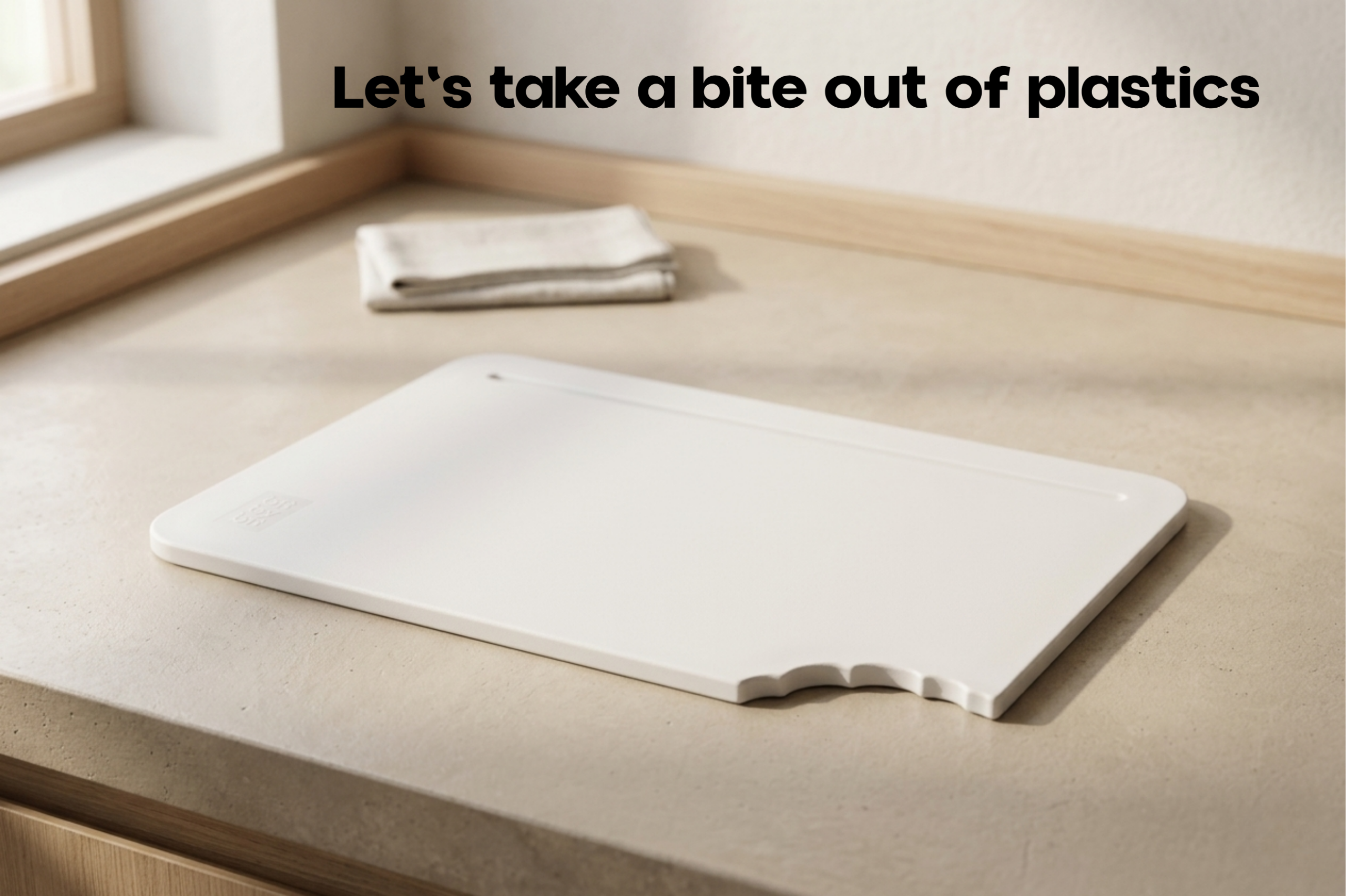
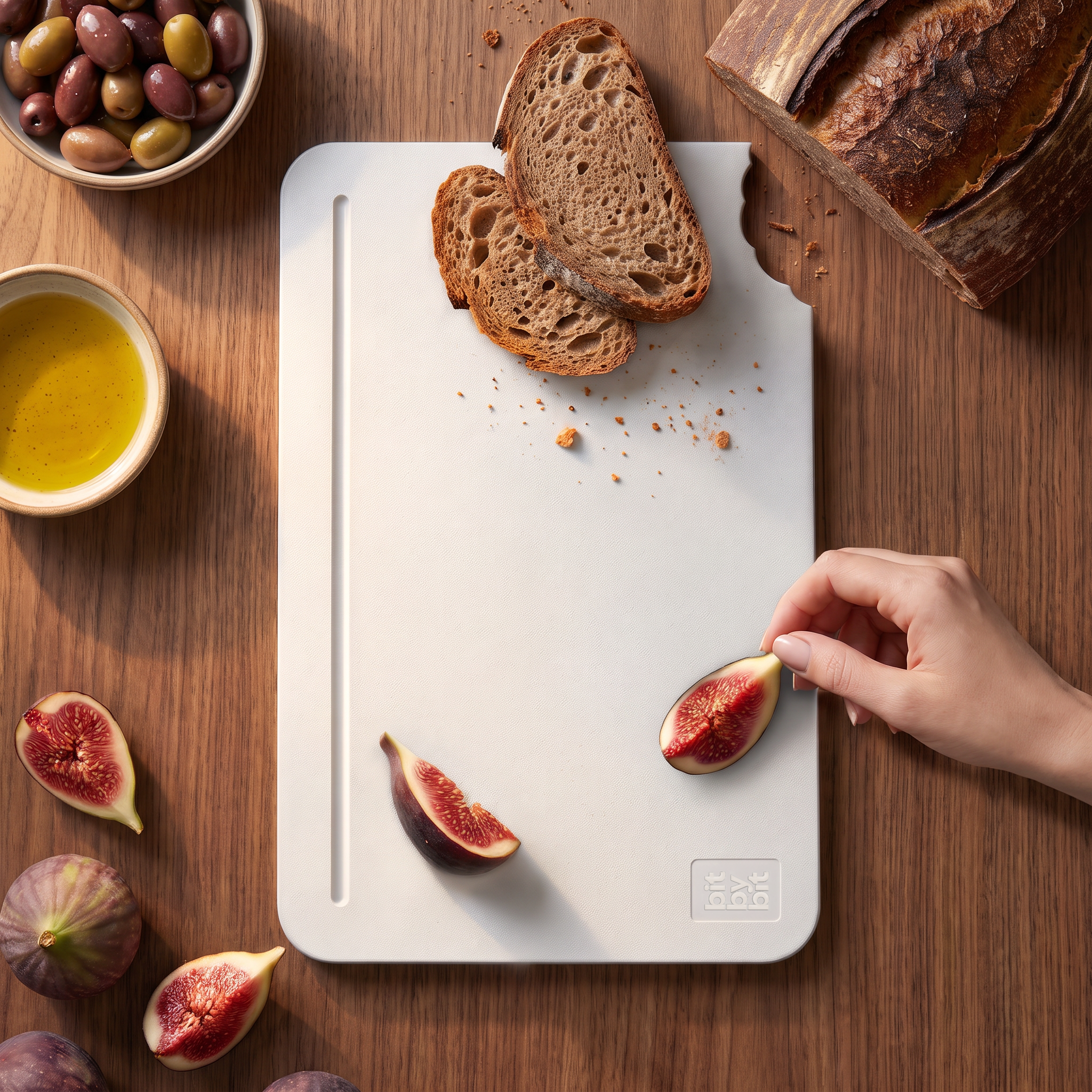
After many rounds of testing and optimisation, the result is a durable, non-porous, knife-friendly and dishwasher-safe cutting board made from PHA and produced in Limburg, the Netherlands.
An important part of the innovation is that the material choice does not have to come at the expense of usability. Sustainability alone is not enough to convince people to switch. The product has to work just as well as, or preferably better than, the alternatives people already use.
More information here: www.bitbybitboards.com