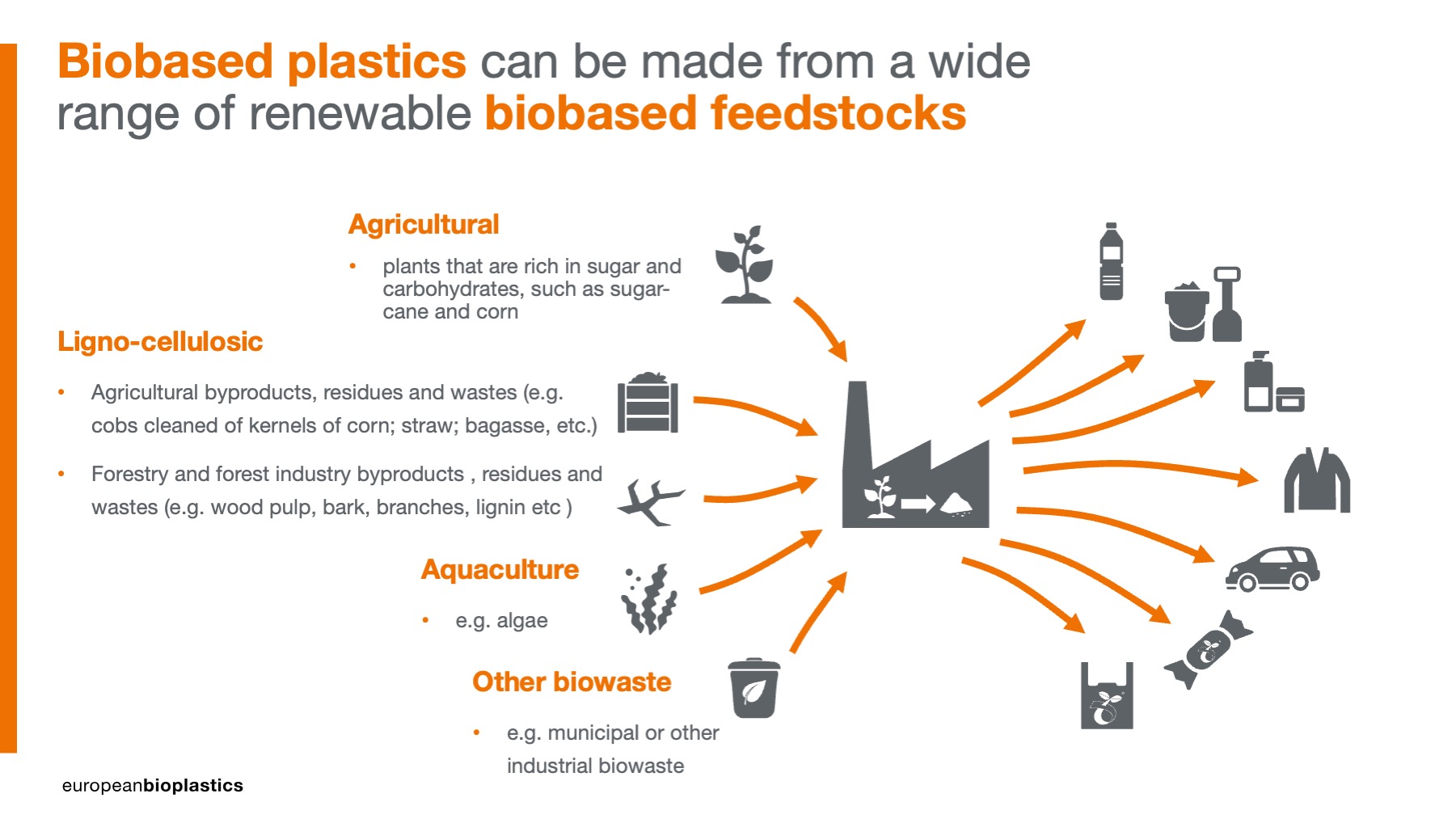
Today, bioplastics are mostly made of carbohydrate-rich plants such as corn, sugar cane or sugar beet – so-called agricultural feedstocks. Agricultural feedstocks are currently the most efficient for the production of bioplastics, as they require the least amount of land to grow and produce the highest yields.
The bioplastics industry is also using non-edible crops such as cellulose for the production of biobased materials. Innovative technologies focus on non-edible by-products of the production of food crops, which generate large amounts of cellulosic by-products such as straw, corn stover, or bagasse that can be used to produce biopolymers.